


AI product photo shoot: product photography with AI
Introduction
A classic product photo shoot involves a studio, crew, transport, props, and production time. But what happens if you remove all of that completely? In the context of the rapid evolution of AI generation technologies, we wanted to test whether we could obtain commercial-standard product images — without physically photographing anything. We created a demo AI photo shoot centered on products from the film industry: video cameras (ARRI, Sony), cinema lenses (Zeiss, Atlas) and professional filming equipment.
- video cameras (ARRI, Sony)
- cinema lenses (Zeiss, Atlas)
- professional filming equipment
The purpose of this project was not a direct commercial one. It was an internal DEMO (April 2026), through which we wanted to test the real limits of the technology and demonstrate that AI product photography can become a viable alternative to traditional production.
What is an AI photo shoot (and why it is becoming relevant)
An AI photo shoot, or AI-generated product photography, is a modern alternative to studio photography. Instead of a physical studio, lights, and logistics, you use creative direction, visual references and AI product photography tools. The intended result remains the same: realistic product images that can be used in campaigns, e-commerce, or branding. More and more brands are looking for solutions such as:
- AI product photography
- AI product photography
- AI-generated product images
- AI photo studio
because they offer flexibility and speed that are impossible to achieve in traditional production.
How an AI product photo shoot works
The process is different from a classic photo shoot, but the structure remains similar.
- Defining the creative direction
- Choosing the visual style
- Building scenes through prompts
- Iterations for realism and consistency
- Selection and post-processing
The difference is that you do not build the set physically, you generate it.
But you still need the same expertise: composition, lighting, and artistic direction.
The advantages of AI product photography
AI-generated product photography comes with several clear advantages:
- it eliminates studio and logistics costs
- it allows the rapid generation of multiple visual variations
- it offers total control over the environment
- it reduces production time
- it allows testing multiple creative directions at no extra cost
This completely transforms the way a product photo shoot can be created.
So, we gave ourselves an internal test at Parcfilm. We created a photo production brief with four different scenarios and setups, which we handed over to our post-production colleagues for execution. They created the images based on the established directions: products from the cinematography field (cameras, lavaliers, microphones, etc.) placed in four types of environments — jungle / nature, urban environment, abstract / minimalist studio, and a “quiet luxury” universe.
Here is what came out of it:
Nature / Jungle – storytelling and natural integration
In this direction, the product is not just presented, but integrated into an organic environment.


We built frames with dense vegetation, naturally filtered light and a cinematic atmosphere


The main test was how well AI could integrate a technical object into a complex environment. The result shows that the materials, reflections, and light are coherent, while the product remains the focal point. This direction is ideal for brand campaigns and visual storytelling.


Urban / Street – realism and dynamism
The urban direction was built around realism.
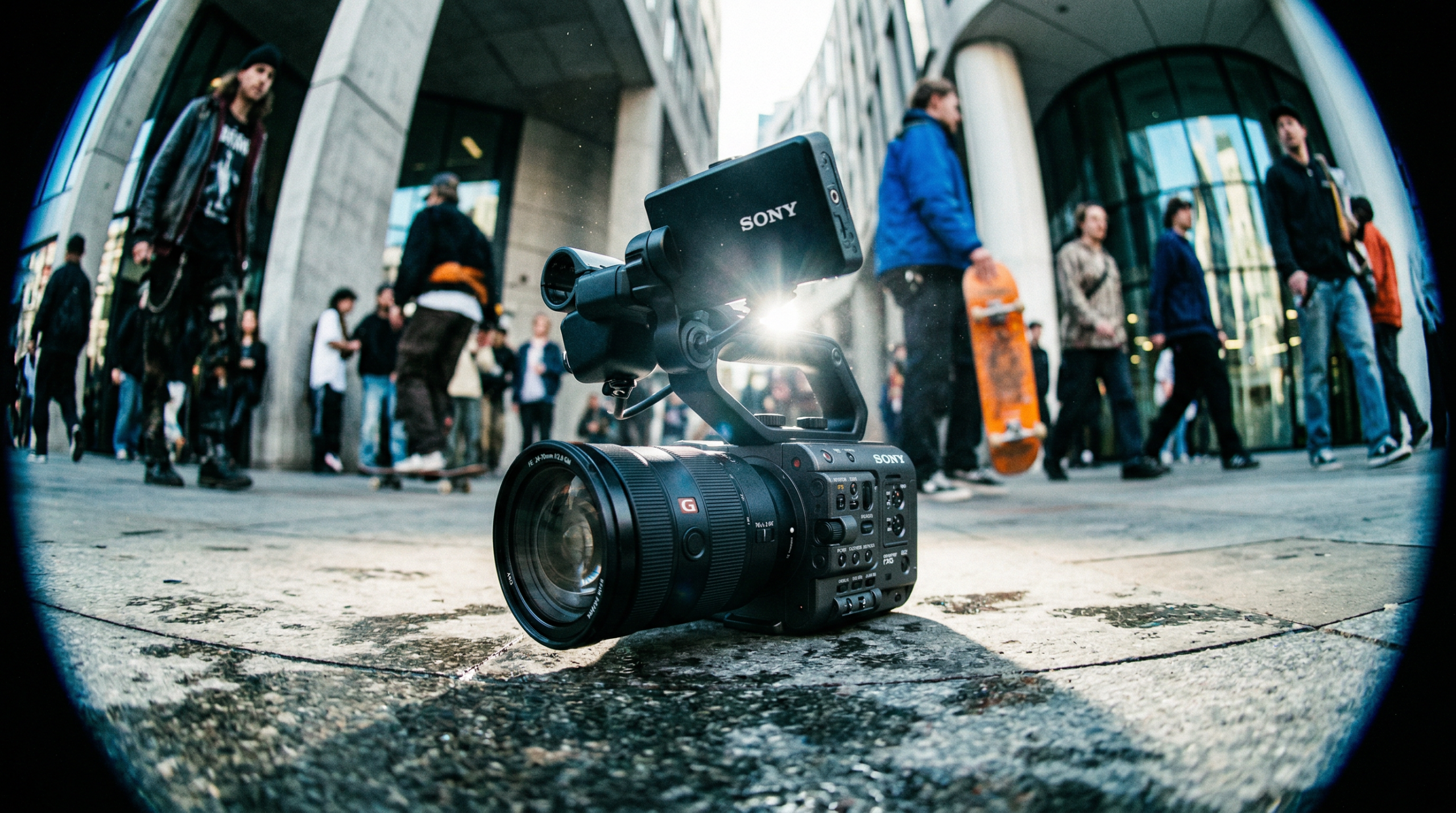

We aimed for frames that look like they were captured in real situations: dynamic shots, natural angles, human interaction, recognizable urban contexts
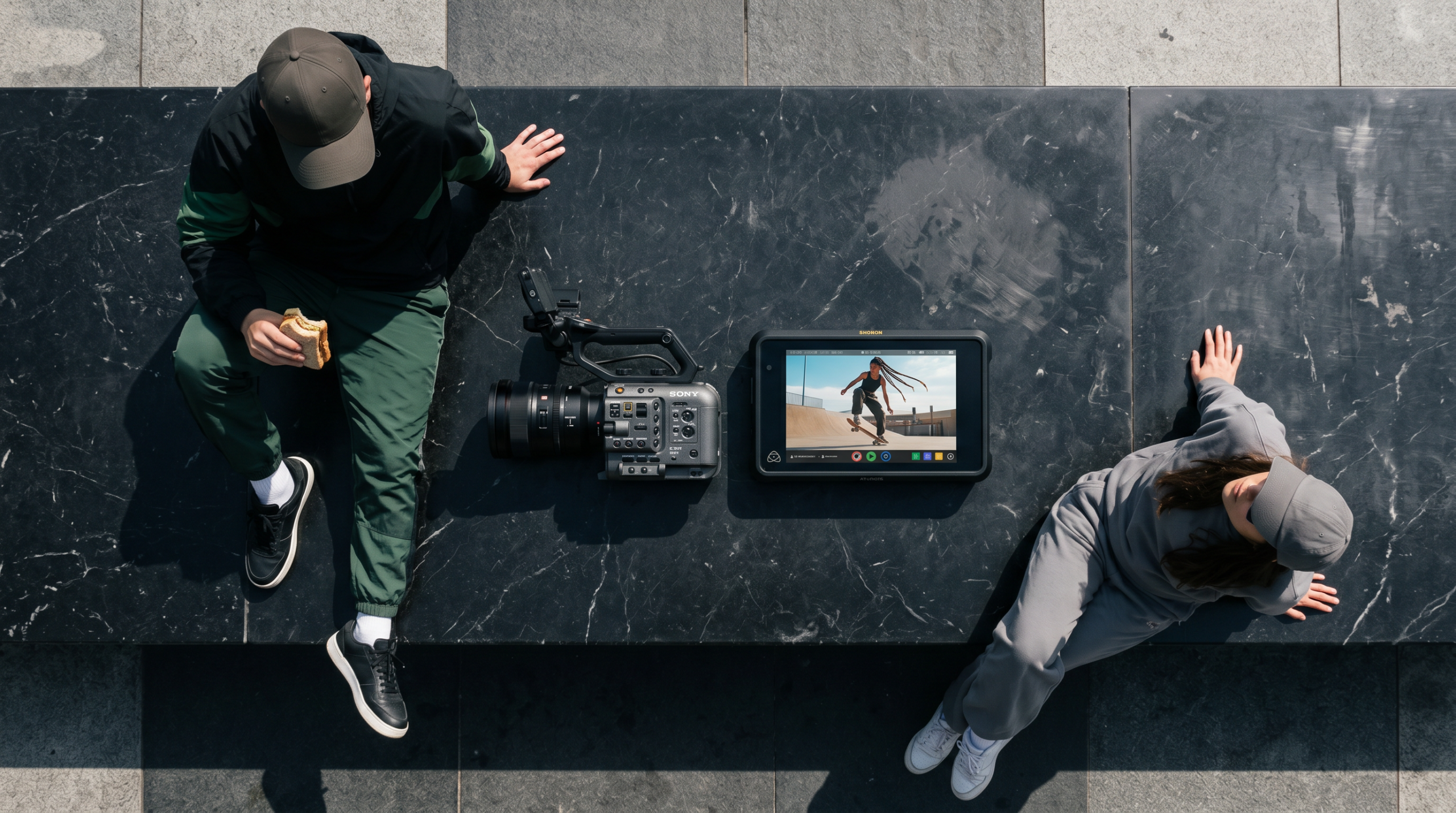
The result is convincing because the images do not look “generated,” but captured. This direction is suitable for modern content, social media, and dynamic campaigns.


Abstract / Minimal – control and premium aesthetics
This is the area closest to classic studio photography.


The frames are clean, simple and extremely controlled


There are no distractions here, and the product is the center of attention. The result is very close to professional product photography, usable directly in e-commerce or presentations.
Luxury / Quiet Luxury – brand positioning


In this direction we built frames inspired by premium aesthetics: classic libraries, rich materials (velvet, wood, leather), warm, cinematic light. Here it is not only about the product, but about its perception. The result is a series of images with a strong visual identity, suitable for high-end brands and premium campaigns.


Conclusion – AI product photography in 2026
This AI photo shoot was a real test. The conclusion is clear: AI-generated product photography works, but only when it is properly controlled. AI does not replace classic photography, but it becomes an extremely powerful tool for fast production and creative exploration. The difference is not made by the tool, but by the creative direction and experience.
AI photo shoot with Parcfilm
At Parcfilm, we use AI as an integrated part of the production process.
We can create:
- AI photo shoots for products
- AI product photography for campaigns
- AI-generated images at commercial standard
Whether you need content for e-commerce, visuals for campaigns, or new creative directions, we can build the right solution.
If you are looking for an AI photo shoot or a partner for AI product photography, Parcfilm has the experience needed to deliver real results.